
100+ Fruits That Start With A
I’ve put together this list of delicious fruits that begin with ‘A’. Look no further for your daily dose of inspiration. From apples to apricots to acerola–I’ve got you covered!
Fruits beginning with A are an amazing bunch. I jotted down a list of 20 off the top of my head, but once I started looking, I was shocked at how many there were!
Related: Fruits That Start With I
Fruits That Start With A
From all over the world, let’s learn over 100 fruits that start with the letter A:
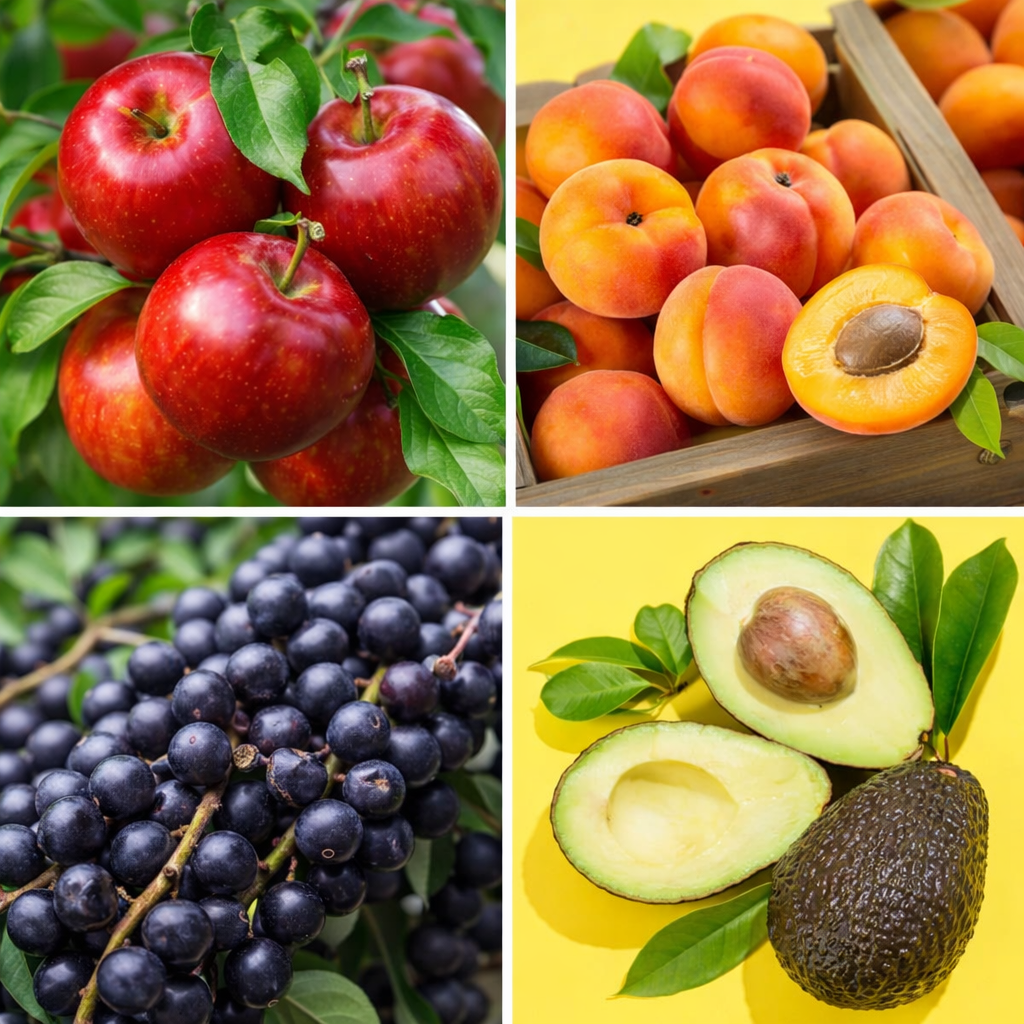
- Apple – The apple is a round to slightly oval fruit that can be red, green, or yellow. It is crisp and juicy with a sweet to tart flavor. Apples are eaten raw or sliced, and the peel is often consumed. They are also used in pies, sauces, and juices.
- Apricot – The apricot is a small, round to oval fruit with soft, velvety orange skin. It has a sweet and slightly tangy taste. Apricots are eaten fresh or sliced, and the peel is edible. They are also commonly dried or made into jams and preserves.
- Avocado – The avocado is a pear-shaped fruit with dark green to black skin and creamy pale green flesh. It has a mild, buttery flavor. Avocados are sliced, mashed, or eaten raw, while the skin and large seed are discarded. They are commonly used in salads, spreads, and smoothies.
- Ananas (Pineapple) – Pineapple is a large, cylindrical tropical fruit with rough, spiky skin and golden, juicy flesh around a fibrous core. It is sweet, tangy, and aromatic. The fruit is peeled, cored, and sliced before eating, and it is often used in desserts or savory dishes.
- Açaí – Açaí berries are small, round, and dark purple. They have a tart and earthy flavor. Açaí is eaten as pulp, in smoothies, or in bowls, with seeds and skin discarded.
- Asian Pear – The Asian pear is round or slightly flattened with yellow-brown or green skin. It is crisp, juicy, and mildly sweet. Asian pears are usually eaten raw and sliced, with the peel edible.
- Ackee – Ackee is a pear-shaped, red fruit that splits open when ripe to reveal creamy yellow flesh and black seeds. The flesh has a mild, slightly nutty flavor when cooked. Ackee must be boiled or sautéed before eating, and the seeds and red parts are toxic.
- Aprium – Aprium is a hybrid of apricot and plum, small to medium in size, with yellow-orange to reddish skin. Its flesh is sweet with a hint of tartness. Apriums are eaten fresh, either peeled or unpeeled.
- Appleberry – Appleberry is a small, round fruit ranging from red to purple. It is sweet and slightly tart. Appleberries are eaten fresh or made into jams, while the seeds are discarded.
- Atemoya – Atemoya is heart-shaped or rounded with green or yellowish bumpy skin. Its flesh is creamy and custard-like, sweet, and aromatic. Atemoya is eaten fresh with seeds removed, and the skin is usually discarded.
- African Horned Cucumber – An oblong, spiky, orange fruit with bright green jelly-like interior. It has a mildly sweet and tart flavor. The pulp is scooped out and eaten raw or in drinks, while the skin is not consumed.
- Abiu – Abiu is a small to medium, yellow, smooth-skinned fruit. It has soft, translucent, sweet flesh with a custard-like texture. Abiu is eaten fresh with seeds removed, and the skin is discarded.
- Ambarella – Ambarella is an oval, green to yellow fruit with crunchy flesh. Its taste ranges from mildly sweet to slightly tart. It is eaten raw, cooked, or pickled, and the peel can be eaten but is often discarded.
- Araza – Araza is a round, bright yellow fruit with soft pulp. It is very tart and juicy. Araza is eaten fresh or juiced, while the peel is usually discarded.
- Aronia (Chokeberry) – Aronia is a small, round, deep purple to black berry. It is very tart and astringent. Chokeberries are eaten fresh in small amounts or processed into juices, jams, and smoothies.
- Annona species (soursop, sugar apple, cherimoya) – These fruits are heart-shaped or oval with green bumpy or soft skin. Their flesh is sweet, custard-like, and aromatic. Annona fruits are eaten fresh with seeds discarded, and the skin is not eaten.
- Amra (Indian Hog Plum) – Amra is a small, oval, yellow to orange fruit. It is sour in taste. Amra is eaten raw with salt or spices, pickled, or made into chutneys, and the peel is usually discarded.
- Arhat Fruit (Monk Fruit) – Arhat fruit is small and round, green to brown in color. It has a very sweet, mild flavor. It is usually dried and used as a natural sweetener, with the pulp eaten and skin edible.
- Australian Finger Lime – Finger lime is elongated and cylindrical, green, yellow, or pink. It contains small, caviar-like juice vesicles with a tart citrus flavor. The pulp is eaten raw, typically scooped out, while the peel is discarded.
- Amelanchier (Serviceberry) – Serviceberries are small, round, dark purple to blue fruits. They are sweet with a hint of tartness. They are eaten raw, or processed into jams, pies, or juices, and the skin and pulp are edible.
- Akebia Fruit – Akebia is an elongated, purple-brown pod with soft, sweet pulp and small black seeds. The pulp is eaten raw or scooped out, seeds discarded, and the skin is usually not eaten.
- Alpine Strawberry – Alpine strawberry is tiny, conical, and bright red. It is intensely sweet and aromatic. It is eaten raw whole, with the skin and seeds consumed.
- Arctic Raspberry – Arctic raspberry is small, round, and red to orange. It is tart and juicy. Arctic raspberries are eaten raw, in desserts or jams, with skin and seeds edible.
- American Persimmon – American persimmon is round, orange to reddish, and can be sweet when ripe or astringent if unripe. It is eaten fresh or cooked, with skin edible and seeds removed.
- American Pawpaw – Pawpaw is oblong to oval, green to yellow. It has creamy, custard-like flesh with a tropical flavor. It is eaten fresh with seeds removed, and the skin is discarded.
- Apple Guava (Psidium guajava) – Guava is round to oval, green to yellow. Its pulp is sweet and aromatic. Guava is eaten raw or juiced, with the skin edible but sometimes tough, and seeds usually swallowed or discarded.
- Ambrosia Melon – Melon is round or oval with yellow to orange rind. Its flesh is sweet and juicy. It is eaten fresh, sliced, with the peel discarded.
- Atis (Philippine Sugar Apple) – Atis is round to heart-shaped, green with bumpy skin. Its flesh is creamy and sweet. It is eaten fresh with seeds removed, and the skin is discarded.
- African Cherry Orange – Small, round, bright orange fruit. Its pulp is sweet-tart and eaten raw or in jams, with peel usually discarded.
- African Baobab Fruit – Large, oblong, hard brown pod. Its dry, powdery pulp is tart and eaten fresh or in drinks, while the seeds are roasted or ground, and the shell is discarded.
- Anjou Pear – Round, slightly elongated, green to yellow fruit. It is sweet and juicy. Eaten raw or sliced, with the skin edible.
- Autumn Olive (Elaeagnus umbellata) – Small, round, red berries with silvery spots. They have a tart-sweet flavor and are eaten raw, in jams, or processed.
- Arbutus Berry (Strawberry Tree Fruit) – Round to oval, bright red fruit. It is sweet and aromatic. Eaten raw or in jams, with peel and pulp edible, seeds small.
- Amarena Cherry – Small, dark red to black cherry. It is tart and intensely flavored. Eaten fresh or preserved in syrup, with peel and pulp consumed.
- Anne Raspberry – Small, golden berries made up of tiny drupelets with a hollow center. They taste sweet-tart with subtle apricot notes. Eaten whole with seeds, either fresh or in desserts.
- Antigua Black Pineapple – Medium-sized with dark green to almost black skin and golden, juicy flesh. It is exceptionally sweet and low in acidity. The fruit is peeled, cored, and sliced to eat.
- Arkansas Black Apple – Round with very dark, almost black skin and firm white flesh. It is tart and spicy when freshly picked, mellowing in flavor with storage.
- Achotillo (Rambutan) – Round fruit with bright red hairy skin and translucent white pulp surrounding a single large seed. It tastes sweet, mildly tart, and juicy.
- Asam Payak – Clustered fruit with scaly skin and yellow or cream segmented pulp. It tastes bitter yet slightly sweet. The pulp is eaten, while the skin is not consumed.
- Achocha – Small, green, cucumber-like fruit with bumpy skin and hollow, soft seeds. It tastes mild, similar to cucumber or pepper. The fruit is eaten raw or cooked, and the seeds are edible.
- Achacha – Egg-shaped, orange-red fruit with smooth skin and juicy white pulp. It has a sweet-tart flavor similar to lychee. The fruit is pinched open, the pulp eaten, and seeds discarded.
- Ambade (Indian Hog Plum) – Small, oval fruit with freckled green skin and juicy flesh around a fibrous pit. It tastes sweet-sour, reminiscent of green mango and pineapple. The pulp is eaten while the pit is avoided.
- Australian Round Lime – Small, green fruit with thin skin and juicy, tart flesh. It has a sharp, acidic flavor. The fruit is cut, squeezed, or eaten in segments.
- Argan – Oval fruit with wrinkled golden-brown skin and firm, bitter pulp surrounding a hard nut. The pulp is rarely eaten, and the nut is primarily pressed for oil.
- Amaou Strawberry – Large, round, bright red strawberry with glossy skin and juicy, sweet, aromatic flesh. Eaten whole with seeds edible.
- African Breadfruit – Large, round fruit with green, rough skin and starchy white flesh filled with many seeds. It has a mild, potato-like flavor and is boiled, roasted, fried, or baked, with seeds edible.
- Amazon Tree Grape – Small, round fruit with purple skin and juicy, sweet flesh. Eaten fresh or juiced, seeds usually spat out.
- Abate Fetel Pear – Long and narrow with green-yellow skin and white, juicy flesh. It tastes sweet, slightly tart, and firm. Eaten raw or sliced, seeds discarded.
- Anchovy Pear – Small, oval fruit with green-taupe firm flesh and small seeds. It tastes mild and slightly salty. Eaten fresh or pickled, seeds generally not consumed.
- Andean Blackberry – Small, round, dark purple fruit with juicy flesh. It tastes sweet-tart with a deep berry flavor. The berries are eaten whole with seeds.
- Apple Berry – Small, oval fruit with green or purple soft skin and juicy flesh. It tastes tart, combining flavors of kiwifruit and apple. Eaten whole with seeds.
- Armenian Cucumber – Long and slender with pale green, smooth or bumpy skin and crisp, watery flesh. It has a mild, sweet flavor similar to cucumber and melon. Eaten raw, sliced, or peeled, with seeds edible.
- Abiurana – Tropical fruit from Brazil, small, yellow-orange, with sweet-tart pulp. It is eaten fresh or used in juices and jams.
- Acai Palm – Fruit from the acai palm tree, distinct from processed açaí berries. Small, dark purple, and mildly tart. Eaten fresh, juiced, or processed.
- Afghan Cherry – Small red cherry-like fruit. Sweet and tart. Eaten fresh or in jams.
- African Custard Apple – Tropical fruit with creamy, sweet flesh and green bumpy skin. Eaten fresh.
- Alaskan Bunchberry – Tiny red berries from North America. Sweet-tart and aromatic. Eaten fresh or in preserves.
- Allegheny Berry – Native wild berry. Small and dark, sweet with tart notes. Eaten raw or in jams.
Botanical Fruits That Start With A
Avocados are just scratching the surface! These sneaky plant-based foods are actually fruits.
- Aubergine (Eggplant) – Technically a fruit, usually cooked in savory dishes; has purple, glossy skin and spongy flesh.
- Acorn squash – A small winter squash with green ridged skin and sweet, starchy flesh used in roasting or soups.
- Amaranth – Amaranth is a tiny, round grain that is technically a fruit called a caryopsis. It has a mild, slightly nutty flavor. The seeds are eaten whole, popped like popcorn, ground into flour, or used in cereals.
- Almond – The almond is a hard-shelled drupe that contains an edible seed. It has a mild, nutty flavor. Almonds are eaten raw, roasted, or processed into nut products, with the shell removed.
- Acorn – Acorns are oval to round nuts from oak trees, enclosed in a woody shell. They have a bitter taste when raw. Acorns are usually leached to remove tannins and then ground into flour or roasted.
Culinary Fruits That Start With A
Think you know your fruits that start with A? You might be in for a berry big surprise! These ‘A’ fruits in disguise are eaten in processed form.
- Amchoor – Amchoor is made from unripe green mangoes that are dried and ground into a pale yellow powder. It has a tart, fruity flavor with a slightly sour taste. Amchoor is used as a spice or flavoring in cooking rather than eaten raw, and it is sprinkled or added to sauces, chutneys, and marinades.
- Annatto fruit – Annatto fruit is a small, red-orange capsule containing seeds. The seeds have a slightly sweet and peppery flavor. The pulp and seeds are processed to make a natural coloring or spice, and the fruit itself is not typically eaten raw.
- Arhat fruit (monk fruit) – Arhat fruit is small and round with a green to brown skin. It has an intensely sweet flavor. It is usually dried and processed into a natural sweetener, and the pulp is eaten in this processed form rather than raw.
- Akee apple (cooked) – Akee is a pear-shaped, bright red fruit that opens when ripe to reveal soft yellow flesh and black seeds. The flesh has a mild, slightly nutty flavor when cooked. Akee must be boiled or sautéed before eating, as the seeds and red parts are toxic, and it is a traditional staple in Jamaican dishes.
- Atalantia – Atalantia is a small, round citrus-like fruit with green to yellow skin. It has a sour, bitter taste. The fruit is rarely eaten fresh and is mostly processed into jams or flavoring extracts.
- Australian bush tomato – The Australian bush tomato is a small, round fruit that ranges from green to reddish-brown when ripe. It has a strong, tangy, slightly smoky flavor. It is usually dried or processed into sauces and is not eaten raw.
- Agave fruit – Agave produces small, dry fruits that are occasionally eaten raw or fermented. They have a mildly sweet to tangy taste. Agave fruits are rarely eaten fresh and are mostly processed.
- Annatto seeds – Annatto seeds are reddish-orange and hard. They are used mainly for natural coloring or as a spice, not eaten raw.
- Anacardium occidentale (cashew) – Cashew seeds are kidney-shaped and must be roasted to remove toxins. They have a rich, nutty flavor and are eaten raw, roasted, or processed.
- Aleurites fordii (Tung tree fruit) – Tung tree fruit is an oval fruit containing hard seeds. It is not eaten fresh and is only processed to extract oil or flour.
- Acacia pods – Some Acacia species produce pods with edible seeds. The seeds have a mild, nutty flavor and are sometimes ground into flour or eaten roasted.
- Annona muricata seeds – Soursop seeds are black and hard. While the pulp of the fruit is sweet and edible, the seeds are processed to extract oil rather than eaten directly.
FAQ – Fruits That Start With A
What rare fruits start with the letter A?
Rare or unusual fruits that start with the letter A, including tropical and exotic fruits are the Abiu, Acerola, Akee, Atemoya, African horned cucumber, Araza, Australian finger lime, Amra, Arhat fruit, Ambarella, Amla, Azarole, African baobab fruit, and Akebia fruit.
What are fruits that start with “Ad”?
Fruits that start with the letters “Ad” include Adansonia fruit (fruit of the baobab tree) and Adzuki bean (technically a legume, sometimes classified botanically as a seed/fruit).
What fruits start with “Am”?
Fruits that start with “Am” include Amaranth, Amra (Indian hog plum), Amchur, Ambarella, Ambrosia melon, Amela, Amla (Indian gooseberry), Amanatsu, Amchoor, Amelanchier, Amaranth seeds, Atemoya, Amaranth grain
What ‘A’ fruits are only eaten by animals?
‘A’ fruits that wildlife consume but are unpalatable or avoided by humans include: American Beautyberry, African Star Apple, and Araza.
I hope you’ve enjoyed learning about these fruits that start with the letter A. I also made lists of Fruits That Start With I and Desserts That Start With A if you’re looking for more food inspo!